
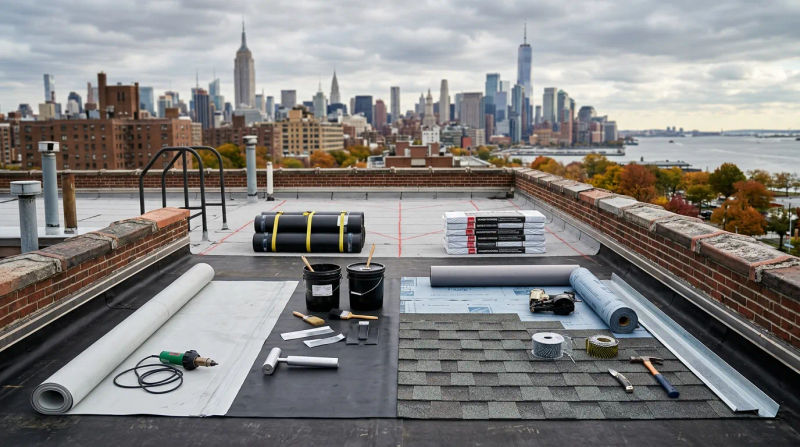
As a Senior Project Superintendent with over 18 years on job sites across Brooklyn, I can tell you that the single biggest question homeowners have is, “What’s this going to cost?” A roof replacement is a significant investment, and you deserve a clear, straightforward answer. My goal here isn’t to sell you anything, but to give you the practical, field-tested insight you need to budget for a new roof in New York City and understand the real-world factors that influence the final price.
With fall in full swing and heavy leaf fall clogging gutters, now is the perfect time to assess your roof's condition. October provides a practical budgeting window to schedule tear-offs and weatherproofing before colder temperatures and shorter daylight hours make roofing timelines tighter.
Average Costs in New York, NY
Let's get right to it. Providing a single price is impossible, but I can give you realistic budget ranges based on what our crews see every day. In roofing, we price things by the “square,” which is a 100-square-foot area. The total roof replacement cost NYC homeowners can expect in 2026 will largely depend on the type of roof system.
- Flat Roof Replacement: This is the most common system for the city's attached brownstones and rowhouses. For a standard flat roof using materials like TPO, EPDM, or Modified Bitumen, you can expect to budget between $1,500 and $2,500 per square ($15 to $25 per square foot). For a typical 1,000-square-foot rowhouse roof, this puts the total in the $15,000 to $25,000+ range.
- Shingle (Pitched) Roof Replacement: While less common on classic rowhouses, some homes have pitched sections or are detached. For a standard architectural asphalt shingle roof, the cost is typically lower, ranging from $800 to $1,500 per square ($8 to $15 per square foot).
These prices generally include everything: materials, professional labor, tear-off of a single layer, disposal, and basic permits. The wide range accounts for the many variables we encounter on-site, which I'll break down next.
Factors That Affect Price
The sticker price of a roof is more than just materials. In a dense urban environment like New York, logistics and labor are huge components of the final cost. Here’s what drives the numbers up or down.
1. Roof Access and Building Height This is a massive factor in NYC. A two-story home with easy backyard access is completely different from a five-story walk-up with no place to stage materials. We have to consider:
- Staging: Where will we place dumpsters and new materials? Limited street space often requires special permits and coordination.
- Lifts and Scaffolding: Taller buildings require mechanical lifts or extensive scaffolding to get our crews and materials safely to the roof, adding significant cost.
- Logistics: Simply moving materials up and debris down in a crowded neighborhood requires a more organized workflow and more labor hours.
2. Materials and System Chosen Your choice of roofing material is a primary cost driver. A basic TPO membrane will have a different price point than a premium, multi-ply modified bitumen system. The thickness of the membrane and the type of insulation specified will also impact the flat roof replacement cost New York budget.
3. Labor, Tear-Off, and Disposal This is where NYC roofing labor and material pricing 2026 gets complex. Labor isn’t just about the installation; it includes the demolition. The roof tear-off and disposal fees NYC contractors charge are based on:
- Number of Layers: Many pre-1940s homes in Brooklyn have had several roofs installed over one another across the decades. Building code requires us to tear off all layers down to the structural deck. Removing three layers of old roofing takes far more time and generates significantly more debris than removing one.
- Debris Removal: Getting a dumpster placed and hauling away tons of old roofing material in the city is a major logistical and financial consideration.
4. Condition of the Roof Deck We can't see the condition of the underlying wood structure - the roof deck or sheathing - until the old roof is gone. On older homes, it's common to find rotted, soft, or delaminated plywood or planks that must be replaced to create a solid substrate for the new roof. This is an unforeseen cost that should always be budgeted for as a contingency.
5. Insulation and Code Upgrades When replacing a roof, you're often required to bring the insulation up to current energy code standards. This adds material and labor costs but pays you back over time in lower energy bills.
6. Complexity A simple, flat, open roof is the most straightforward. The cost increases with complexity: skylights, HVAC curbs, vents, parapet walls, and numerous drains all require extra time for detailed flashing and sealing to ensure they are completely watertight.
How to Get the Best Value
Getting the best value doesn't mean finding the cheapest price. A poorly installed cheap roof will cost you far more in the long run. Value comes from a durable, well-executed project that protects your home for decades.
- Invest in Quality Materials: A slightly more expensive, thicker membrane or a material with a better warranty can add 20-30% more life to your roof, making it a better long-term investment.
- Don't Cut Corners on Labor: A roofing system is only as good as its installation. Our trained crews work with standardized processes to ensure every seam is welded perfectly and every flashing is sealed correctly. This expertise prevents leaks and premature failure.
- Get a Detailed, Line-Item Estimate: A trustworthy contractor will provide a transparent proposal that breaks down the costs for materials, labor, permits, and disposal fees. At Ad Hodges&Sons General Contractors, we build our estimates this way because it empowers you to see exactly where your money is going and helps compare quotes effectively.
- Address Problems Promptly: Don't ignore a small leak. Water intrusion can quickly turn a simple repair into a major structural problem involving rotted joists and damaged ceilings.
Questions to Ask Your Contractor
Before you sign any contract, you should feel completely comfortable with the team you're hiring. As a superintendent, these are the questions I'd want answered:
- Are you fully licensed and insured to work in New York City? Can I see your documentation?
- Can you provide references from recent flat roofing projects in my neighborhood?
- Who is the on-site supervisor or project manager I will be communicating with?
- What is your process for protecting my property and my neighbors' property during the project?
- How do you handle unforeseen costs, like replacing rotted decking? Is it a fixed price per sheet?
- What manufacturer and workmanship warranties do you provide?
- What does your daily cleanup process look like?
Choosing the right contractor is the most important decision you'll make. Their reliability, capacity, and expertise are what turn a pile of materials into a secure, long-lasting roof.
Ultimately, a roof replacement is a major undertaking, but it’s also one of the most important investments you can make in your property's health and safety. By understanding the factors that shape the cost, you can budget intelligently and choose a partner who will deliver lasting value.
For a personalized estimate in New York, contact Ad Hodges&Sons General Contractors for a free consultation.